CharterFolk Contributor Debbie Veney – Turning the Tassel: Charter School Alumni Are Experiencing Real Success
May 15, 2026
emoore21
This Article was shared on May 15, 2026, by CharterFolk.
Turning the Tassel: Charter School Alumni Are Experiencing Real Success
I believe in the power of charter schools. The first time I stepped into one, I knew there was something special. I could see these schools had the potential to change children’s life trajectories, and I was inspired by success stories that served as proof points. Today we finally have data that shows just how much these schools can impact life outcomes.
I am among the many who believe academic performance is important and should be measured as an indicator of a school’s outcomes.
Particularly within the charter school context, I also understand why it is important to measure academic growth alongside proficiency. Our schools often educate students who arrive at our doors several grade levels behind. As an absolute metric, many of these students are not going to look great on a standardized assessment because they are far from proficient. That does not mean the schools are not doing extraordinary work, or that the students are not making meaningful progress.
Although proficiency may feel like an elusive goal for some students, we have to keep striving toward it. But even then, test scores only present part of the picture.
I have understood this for years but struggled with how to more fully capture what long-term achievement or success really looks like, both for schools and for the students they serve.
Then I had an idea.
What if we measured life outcomes?
What if we looked beyond graduation and examined what happens in the years after high school using data points like salary, homeownership, degree attainment, employment and financial independence as indicators of success?
This struck me as a particularly compelling way to understand the impact of charter schools.
For the reasons I mentioned earlier, sometimes the impact of these schools does not fully show up on a standardized assessment. Some students may have been struggling academically. Some may have been average students, not academic stars. But they had access to the right environment, the right support, adults who believed in them and schools that refused to give up on them.
They learned resilience. Persistence. Confidence.
They learned to believe they could accomplish difficult things.
That is often the magic of a great charter school, but it has rarely been quantified.
So I asked a bigger question: What if students who attended charter schools were not just doing better in school, but doing better in life?
That would be a pretty big deal.
And that is exactly what I set out to find.
I commissioned The Harris Poll to conduct a national survey of 5,000 public high school graduates for a report I authored called Turning the Tassel: What Gen Z Says About Life After High School Graduation. We wanted to better understand how young adults are faring in the first decade after leaving high school. Survey participants graduated from public high schools—charter and district-run—between 2015 and 2025.
What we found was striking.
A Bigger Definition of School Success
For decades, educational outcomes have been defined by graduation rates, test scores and college acceptance rates.
Those measures matter. But they are backwards-looking.
They tell us what happened inside a school building, not necessarily what happened after students walked across the stage.
Our research found that many young adults are struggling after they graduate, although this is far less likely for charter school alumni.
Only about one-half of recent public high school graduates are employed full time. Nearly 20% are currently looking for work. Among those who are working full- or part-time, these young adults are most likely to be concentrated in shrinking industries like retail and customer service rather than high-growth sectors such as healthcare, advanced manufacturing or technology.
Postsecondary completion rates are low. Less than half of students who started four-year degree programs completed them.
Financially, many are struggling to establish independence. Just 24% report owning a home, while 41% live rent-free with family or friends.
This is the real-world context young adults are navigating.
And it makes what we discovered about charter school alumni even more remarkable.
Charter School Alumni Are Thriving
When examining the data from the report, we looked at many factors, including race, family income, gender, and geography. The factor most likely to correlate with success in early adulthood was the type of public school a student attended. It superseded all these other factors. Charter school alumni consistently reported stronger life outcomes than their peers who graduated from district-run schools.
Among the most notable findings:
- Charter school alumni earn, on average, $22,000 more annually than district school graduates within 10 years of high school graduation.
- Charter graduates are more likely to complete postsecondary degrees at every level, including associate, bachelor’s and graduate degrees, resulting in a seven-point advantage overall.
- Homeownership rates among charter alumni are 10 percentage points higher nationally, with charter graduates reporting ownership at 35% compared with 25% among district graduates.
For families, those are not abstract education metrics. Those are life outcomes. They represent financial stability, upward mobility, and independence.
Findings for Historically Underserved Students Are Even More Powerful
As significant as the overall charter findings were, what the data reveal about outcomes for historically underserved students are even more remarkable.
For decades, education leaders have wrestled with persistent racial gaps in educational attainment and economic mobility.
Our report suggests charter schools may be helping disrupt those patterns.
Let’s start with degree attainment. Black, Latino, Hawaiian/Pacific Islander and Native American charter school graduates were just as likely as White district school graduates to earn a bachelor’s degree—and slightly more likely to earn an associate degree. That effectively closes longstanding degree attainment gaps between the races.
The salary data were equally astounding. Working charter school alumni of color reported earning nearly $55,000 more annually than alumni of color who did not attend charter schools.
That finding alone should command national attention. Because when we talk about the impact of these innovative public schools, we are ultimately talking about putting young people on the path to opportunity. And opportunity should be measured not only by access, but by outcomes.
Why This Matters for Charter Advocates
For years, charter school advocates have been forced into debates framed around narrow academic measures, governance arguments or political narratives.
This research offers an opportunity to change that conversation.
Because families do not just want schools that raise test scores. They want schools that prepare their children for life.
Schools that help them secure meaningful work.
Schools that help them persist through college.
Schools that help them build stable financial futures.
Schools that help them become homeowners, community leaders and independent adults.
That is the conversation charter advocates should be having.
How Advocates Can Use This Research
This report should not sit on a shelf.
It should become part of the charter advocacy toolkit.
Lead with life outcomes.
Too often, charter school conversations begin and end only with academic performance metrics. This research allows advocates to broaden the conversation toward outcomes families and policymakers deeply understand and value.
Connect charter schools to economic mobility.
Legislators increasingly care about workforce development, labor shortages and economic competitiveness. Charter advocates should frame these findings within that broader economic context.
Tell alumni stories alongside the data.
The numbers are powerful. The human stories behind them are even stronger. Highlight graduates who have become homeowners, entrepreneurs, healthcare workers, educators or first-generation college graduates.
Push for better accountability systems.
If we truly care about preparing students for life, states should consider tracking long-term alumni outcomes, not just graduation rates.
A New Way to Measure Impact
This research does not suggest academic performance no longer matters.
It absolutely does.
But it does suggest something equally important.
School success should not be measured solely by what happens while students are enrolled.
If education is ultimately about preparing young people for adulthood, then we should be asking whether schools are doing exactly that.
For the charter school movement, these findings are validating.
They affirm what many educators, school leaders and families have believed for years: that the impact of great charter schools often extends far beyond graduation day.
And now, perhaps for the first time at this scale, we have data that helps prove it.
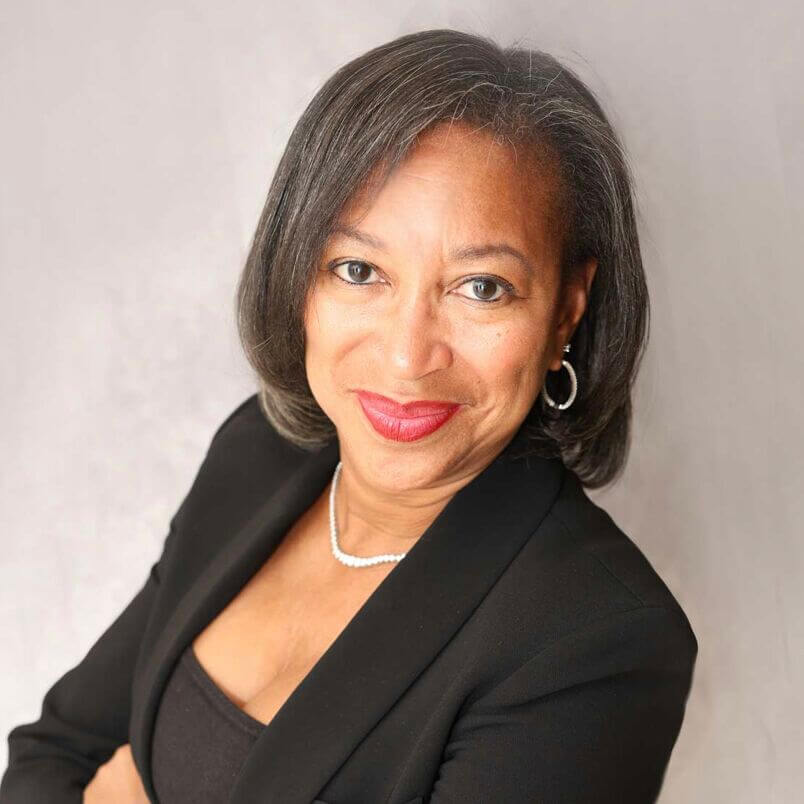
Debbie Veney is the founder and CEO of Agency, a firm that sits at the intersection of communications, advocacy, and parent power. She leads a team of communications and marketing professionals who specialize in reputation management, advocacy campaigns, and shaping national communications strategy around public education choice.
Her earlier career in corporate communications included crisis communications, media relations, and roles at DuPont, CIGNA, and UnitedHealth Care. Before founding Agency, Debbie led the communications and marketing team at the National Alliance for Public Charter Schools, a policy and advocacy nonprofit based in Washington. Debbie also managed the government affairs and communications functions at NewSchools Venture Fund, The Education Trust, and Communities In Schools. In addition, she held a senior communications position at the Gates Foundation, managing media relations across the foundation's domestic investments.
A classically trained ballerina, she is often found dancing with the band—any band. Debbie holds an undergraduate degree in Journalism from Howard University and a master’s degree in Mass Communication from Temple University, where she was inducted into the Alumni Hall of Fame in 2013. Fun fact: she was honored alongside Whoopi Goldberg during this induction.