
Leading, Learning, and Launching a New Year
August 5, 2026
Leading, Learning, and Launching a New Year
When people ask how I became a charter school leader, I always smile and say: “Very slowly… and all at once.” My path started the way so many of ours did: in a classroom, with a stack of papers to grade, a stubborn projector that didn’t always work, and a group of young people who changed everything I thought I knew about teaching and learning.
I loved the classroom. Not in a vague, inspirational-poster way, but in the very real joy of designing experiences that made students sit up, argue, wonder, and build. Those days rooted me in what really matters: kids’ curiosity, families’ trust, and the quiet, daily courage it takes for teachers to show up and try again when yesterday didn’t go as planned.
Over time, I was tapped for “just one more” responsibility – a grade-level lead here, a curriculum committee there, mentoring a new teacher, leading a department, serving on the team to found a new school. With each new role, my responsibilities grew, and a question kept tugging at me:
What if I could help shape the systems around learning, not just the lessons within a single classroom?
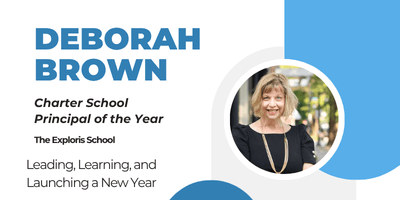
That question eventually pulled me from classroom teacher to school leader, and now into the role of the 2026 Wells Fargo North Carolina Charter School Principal of the Year. It’s both humbling and energizing, because I know how many extraordinary educators are out there doing the daily work in every corner of this state, and I promise to use the microphone I’ve been blessed to have for this year to lift up the work we are all doing to grow our future through our children, and to do this work through our public charter system where we have the true chance to innovate and be responsive to the needs of kids and families.
From “Principal” to “Superintendent”… in One Building
One of the things I want to name clearly in this column, especially for those newer to charter leadership, is how different our roles can be from traditional principals. If you’ve ever wondered why so few charter leaders in North Carolina are called “principals” and instead carry titles like Executive Director or Head of School, there’s a reason.
In North Carolina, each public charter school is its own Local Education Agency (LEA). That means, functionally, many of us sit in a role that looks and feels much more like a superintendent than a single-building principal.
We’re not just leading a school; we’re leading a district.
On any given day, charter leaders are:
- Running a multi-million-dollar nonprofit organization, with all the fiscal oversight, governance, compliance, and strategic planning that entails.
- Serving as instructional leaders responsible for curriculum, assessment, and academic growth across grade levels.
- “Selling” our school as chief recruiters, social media content creators, and marketers
- Acting as chief storytellers and relationship-builders for families, boards, community partners, and legislators who may still be learning what public charters actually do.
We balance buses and budgets, special education and staffing, policy and practice – often in the same hour. And we do it while holding onto the reason we got into this work in the first place: to create schools where every child is known, challenged, and loved.
Why I Stepped Into Leadership
For me, the decision to move into formal leadership wasn’t about leaving the classroom; it was about expanding it.
I had seen what was possible when:
- Teachers were trusted as designers of learning, not just deliverers of content.
- Students were engaged in place-based and project-based experiences that connected their learning to the real world.
- Equity wasn’t a slogan, but a daily lens for how we allocated time, attention, and resources.
I wanted to spend my days helping more teachers do that kind of work, and more students experience that kind of school. The only way to do that, I realized, was to step into the spaces where decisions about curriculum, calendars, budgets, staffing, and policy were being made.
Leadership, for me, has been about impact at scale: using every lesson learned from joyful, messy years in the classroom to shape systems that can benefit hundreds, even thousands, of kids.
Three Moves to Launch the Year Strong
As we start a new school year, I want to offer three practical, doable moves you can make right now as a charter school leader to inspire teachers, students, and families.
1. Make the first days visibly about people, not just procedures
Yes, the bus routes, rosters, and schedules matter. But what your community will remember about the opening weeks is how they felt.
- Consider re-framing those first workdays so they are visibly about connection and professionalism, not just logistics.
- Instead of jumping straight into “administrivia,” give teachers protected time to connect with one another through guided conversations and real decision-making.
- Let go of the icebreakers and games that nearly everyone rolls their eyes at and replace them with authentic ways to connect, like:
- Invite teams to co-create communication norms: who loves a random 8 p.m. photo of your cats on a Tuesday, and who prefers a firm boundary between work and home?
- Have them draft shared expectations for hallway behavior and common spaces so everyone knows what “we do here” looks like in practice.
- Co-Create signs for their doors and spaces that introduce them to students and visitors and share key info about them: Colleges they graduated from, their key core values, favorite thing about the school, etc.
- Take the time to learn each staff member’s coffee order or favorite snacks, and make those small details part of how you show care across the year.
These kinds of meaningful discussions set you up for smoother systems and clearer norms, and will still help people get to know one another while accomplishing actual, substantive tasks. When staff feel treated like professionals instead of summer campers, the tone for the year shifts and trust begins to grow in a way that’s both human and deeply respectful of their expertise.
How might you structure one early staff meeting so that teachers leave having co-created concrete norms or agreements, rather than just having received information?
2. Name a clear, measurable, student-centered focus for the year
Charter schools are known for innovation, but innovation without focus can feel like chaos.
One year I focused on “Sunflowers,” because sunflowers always point to the light, and when the sun is behind clouds, they will turn towards each other. My goal was for teachers that year to lift up the good things and support one another. I handed out packets of sunflower seeds, sunflower stickers, and notepads with sunflowers on them. It was cute, and it was warm, but you know what? It was unfocused. My goal was to strengthen positivity and empathetic support in our culture, but the sunflower metaphor didn’t provide a road map for how we would get there or what achievement of the goal would look like.
Pick one big idea that will anchor your work this year. For example:
- “We are deepening project-based learning.”
- “We are strengthening belonging and relationships.”
- “We are improving feedback and formative assessment.”
Then:
- Talk about it at the opening of every meeting.
- Write it in your email signatures
- Connect board goals and staff development to it.
- Share simple stories and examples that bring that focus to life for families and students.
If you can tie that to a fun slogan or metaphor, all the better, but make sure the goal comes before the symbol. A clear, shared focus helps everyone see how their daily work fits into something larger. Slogans are fun, but tie them to action steps and expectations!
3. Protect time for teacher collaboration – and show you mean it
Teachers are more likely to feel inspired when they have time to think, plan, and create together. What happens in the classroom is usually only as strong as the planning behind it or the time spent analyzing it.
As a leader, you can:
- Guard PLC or team time from being swallowed by announcements and compliance updates.
- Use some of that time to celebrate small wins: a powerful lesson, a student breakthrough, a family partnership that went well.
- Protect teacher planning and revere teacher time! Make meetings into emails or short videos, jump in and cover classes to help where you can, keep your sub list robust and flexible.
- Join collaboration sessions periodically, not to lead them, but to listen, ask questions, and offer support.
When teachers see that you are just as committed to their growth as you are to test scores or enrollment, the culture shifts.
This year, as Charter Principal of the Year, I’m excited to use this column to keep lifting up the realities, challenges, and bright spots of public charter leadership in North Carolina.
We are running districts and nonprofits, yes, but at the heart of all that complexity are simple human hopes: that schools will be places where every child is seen, every teacher is supported, and every family feels they belong.
As you step into this new year, what’s one small leadership move you’re ready to make that could have a big impact on how your teachers and students experience the first month of school?
Deborah Brown
The Exploris School
Deborah@Exploris.org