Building Stronger Schools Through Stronger Community Partnerships
September 28, 2026
emoore21
Building Stronger Schools Through Stronger Community Partnerships
A strong school does more than educate students inside its classrooms. It connects students and families with the people, organizations, and resources that make a community thrive.
For charter schools, building meaningful relationships with community partners can be especially valuable. Local businesses, nonprofits, colleges and universities, civic organizations, healthcare providers, libraries, faith-based organizations, and community leaders can all play an important role in expanding opportunities for students.
But successful partnerships are about more than collecting names or signing agreements. They are built on trust, shared goals, communication, and a genuine commitment to serving students.
Why Community Partnerships Matter
They expand opportunities for students
Schools cannot—and should not—be expected to provide every resource or experience a student may need on their own. Community partners can help schools provide internships, mentoring, career exploration, enrichment activities, service-learning opportunities, guest speakers, academic support, and hands-on experiences.
A local business might introduce students to careers they have never considered. A college might provide opportunities for campus visits or dual-enrollment information. A nonprofit might offer mentoring or family resources.
These experiences help students see how what they learn in school connects to life beyond the classroom.
They strengthen connections with families
Community partnerships can also help schools better understand and respond to the needs of the families they serve.
When schools work alongside trusted organizations, families may gain easier access to resources related to food security, healthcare, employment, transportation, housing, mental health, or other needs.
Just as importantly, partnerships demonstrate that the school sees itself as part of the broader community—not as an organization operating separately from it.
They create pathways to future careers
Preparing students for life after graduation requires more than academic knowledge. Students benefit from opportunities to meet professionals, develop workplace skills, explore career options, and understand the expectations of different industries.
Community partners can help make career preparation tangible. Job-shadowing, internships, career fairs, mentorships, workplace tours, and project-based learning can give students meaningful exposure to the world beyond school.
They build community investment in the school
When community members have opportunities to contribute to a school's success, they become more familiar with its mission, students, and accomplishments.
Over time, those relationships can create a network of people who are willing to volunteer, mentor, provide expertise, open doors, and advocate for opportunities for students.
How Charter Schools Can Build Strong Community Relationships
Building partnerships does not have to begin with a major initiative. Often, the strongest relationships start with simple conversations.
1. Start by listening
Before asking, "What can this organization do for our school?" ask, "What does our community need, and what are our partners trying to accomplish?"
Listening first helps schools identify areas of mutual interest. A partnership should benefit both the school and the community organization.
School leaders can begin by meeting with local organizations, businesses, civic leaders, and families to learn about their priorities, challenges, and resources.
2. Identify shared goals
The most sustainable partnerships are built around a common purpose.
For example, a school and local employer might share a goal of helping students understand career opportunities in the community. A nonprofit and school might share a goal of increasing student access to enrichment opportunities.
Once a shared goal is identified, it becomes easier to determine what each partner can contribute.
3. Make the first request manageable
A community organization may be interested in supporting the school but unsure how to begin.
Instead of immediately asking for a large commitment, start small. Invite a professional to speak to a class. Ask a business to host a workplace tour. Invite a nonprofit to participate in a family event.
A successful small project can become the foundation for a much deeper relationship.
4. Create opportunities for partners to engage with students
Whenever possible, partnerships should have a direct connection to students.
Consider creating opportunities for community partners to:
- Mentor students
- Speak to classes
- Participate in career days
- Provide internships or job-shadowing experiences
- Support clubs and extracurricular activities
- Host workplace or college visits
- Collaborate on student projects
- Provide expertise for project-based learning
- Sponsor student activities or events
- Participate in service-learning projects
The goal is to move beyond a transactional relationship and create meaningful experiences for students.
5. Communicate consistently
Good partnerships require communication.
Schools should establish clear points of contact and communicate expectations, schedules, and opportunities in advance. After an event or project, take the time to thank partners and share the impact of their involvement.
A short email, phone call, student thank-you note, or invitation to a school event can go a long way toward maintaining a relationship.
6. Show partners the impact
Community partners want to know that their time and resources are making a difference.
Share student accomplishments, photographs from appropriate school activities, project outcomes, testimonials, and other evidence of impact. When students can explain what they learned or how an opportunity influenced them, the partnership becomes more meaningful.
Importantly, schools should protect student privacy and follow all applicable policies when sharing student information or images.
7. Make partnerships mutually beneficial
The strongest partnerships are not simply about what a community organization can give a school.
Ask what the school can offer in return.
Students might help a community organization with a service project. Schools might provide space for a community event when appropriate. Students could create presentations, research projects, or other work that addresses a real community need.
When both sides see value in the relationship, the partnership is more likely to last.
Relationships Take Time
The most effective community partnerships are rarely created overnight. They develop through repeated interactions and shared experiences.
A community partner who begins by speaking to one class might eventually become a mentor, internship provider, advisory-board participant, or long-term collaborator. What starts as a single conversation can grow into a relationship that benefits generations of students.
For charter schools, the opportunity is significant: the community can become an extension of the classroom.
By listening to community needs, identifying shared goals, creating meaningful opportunities for students, communicating consistently, and demonstrating impact, schools can build relationships that extend far beyond a single school year.
When schools and communities work together, students gain more than additional resources. They gain connections, experiences, mentors, and a clearer understanding of the possibilities available to them.
And ultimately, that is what strong community partnership is about: bringing people together around a shared investment in the success of students.
How has your school built relationships in your community?
Share your story in the link to the right ---> and inspire others!
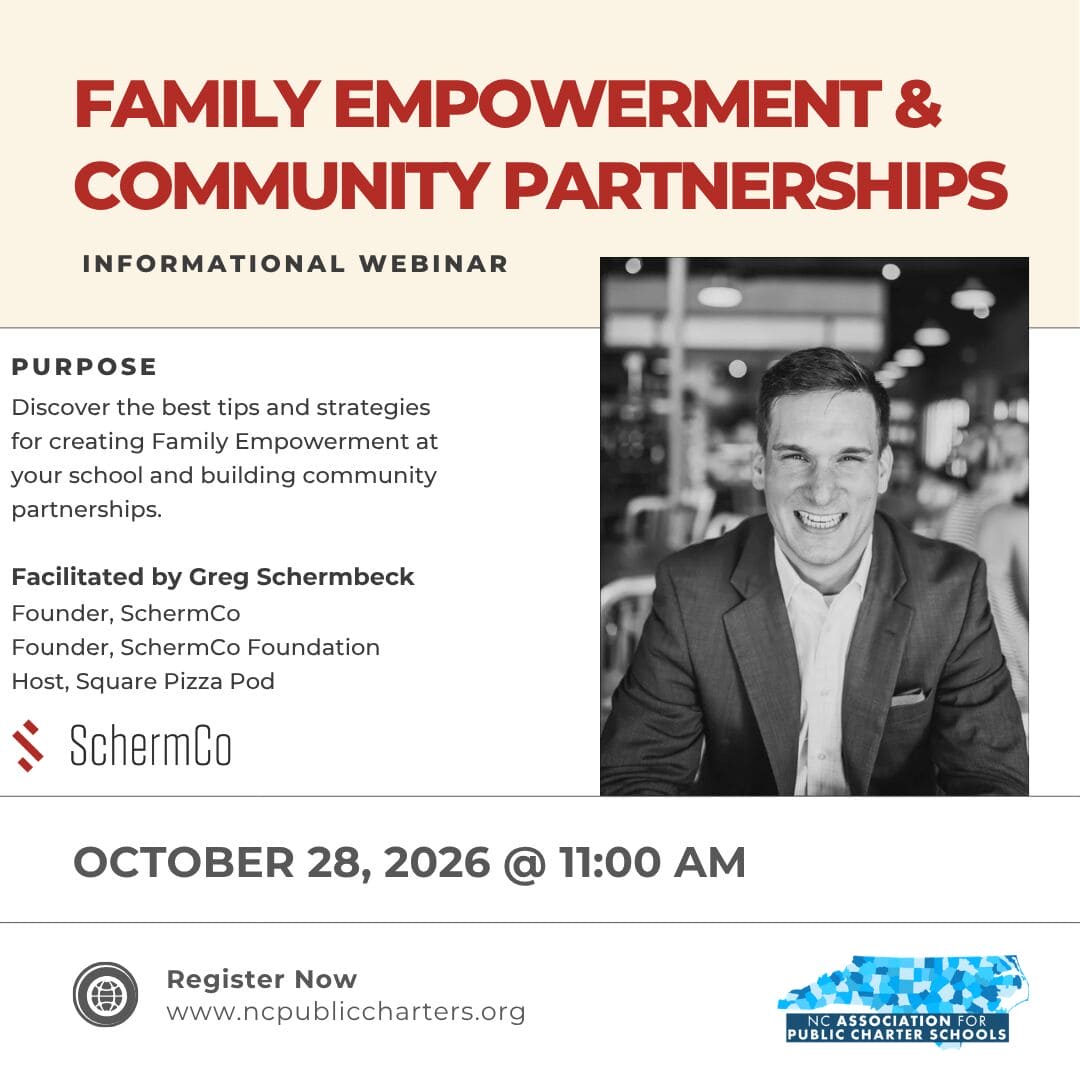
Want to learn more about building community partnerships? Join us on October 28th for our webinar with Greg Shermbeck
Click the graphic below for more information and to register!